Meta’s ad system has a new bouncer.
Every time someone opens Instagram or Facebook, there’s a queue of ads outside the door. Millions of them. Andromeda is the system at that door. It decides which few thousand get in, before anything else gets a say. On 28 October 2026 Meta’s engineers published how they rebuilt it. It’s the biggest change to the front of Meta’s ad machine since Andromeda arrived in December 2024.
No new button in Ads Manager. No email from your account rep. But the door policy changed, and that changes which ads get a shot.
At Milkman® we produce ads and run them, so we read the fine print.
Here’s our take.
What is the Andromeda update?
The October 2026 Andromeda update is a new version of the retrieval system in Meta’s ad delivery. The 2024 version searched a hierarchical index of grouped ads. The new version scores every eligible ad on Facebook and Instagram, at close to the accuracy of Meta’s ranking models, and uses the sequence of ad engagement events per person as a signal.
What changed
The old bouncer judged the group
The 2024 Andromeda sorted ads into layers of groups and spent its attention on the most promising branches. Show up in a promising group and you got a closer look. Show up in the wrong crowd and you might not.
The new one checks every ad
No more waving groups through. The 2026 version scores every eligible ad, with what Meta calls “near ranking-level model performance at retrieval scale”. In plain words: the first cut is now almost as picky as the final one.
And it’s fast
Over one billion ads per second on a single GPU server, which Meta puts at 100 times the 2024 system. It has to be. Meta writes that generative AI tools have helped advertisers create hundreds of millions of new ads. The queue got very long, very quickly.
It remembers the order
The model now reads sequential ad engagement events. It doesn’t only know that someone engaged with your brand. It knows with which ad, and what they saw before that.
Meta’s scorecard
Meta says Andromeda has delivered a 2.4% increase in conversions on Facebook since 2025. That’s Andromeda as a whole, not only the October version, and it’s Meta grading its own homework. Read it as direction, not a promise for your account.
What didn’t change
The bouncer is still only the door. Inside, ranking models sharpened by Meta’s GEM model predict who is most likely to act. Then the auction weighs your bid, that prediction and the quality of the ad. And detailed targeting still works as a suggestion, not a fence.
The whole route from door to feed is in how Meta decides who sees your ads.
What this means for advertisers
Meta’s own summary for advertisers is “better performance automatically”, because retrieval now matches ads across a larger pool. That’s Meta’s claim. Here’s our read on what it changes in practice.
No more plus-ones
A strong ad can’t get stuck behind a weak group anymore, and a weak ad can’t sneak in with a strong one. Every ad is judged on what it brings.
Fifty copies are still one idea
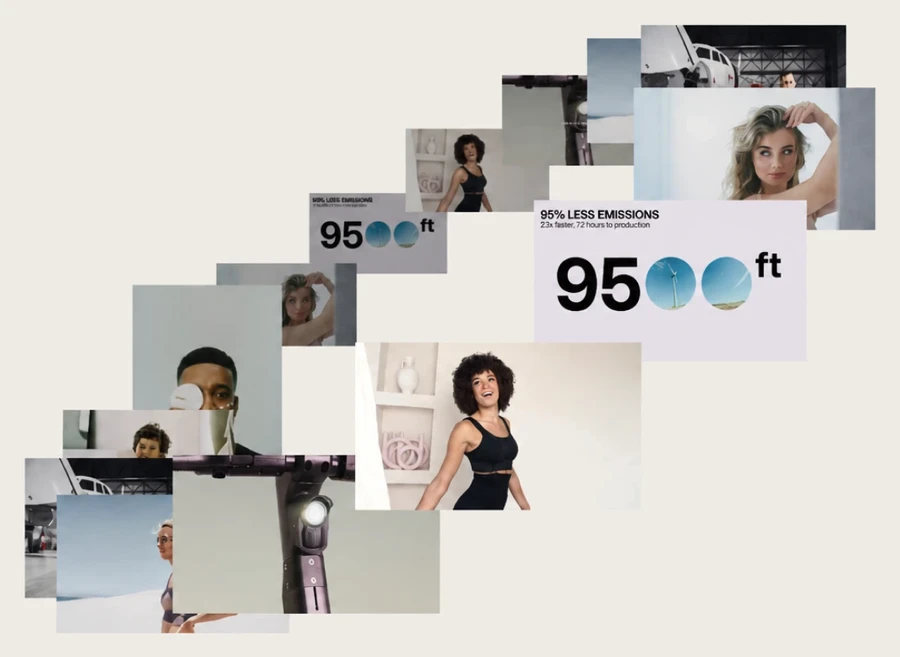
In 2024 Meta’s engineers wrote that more ad diversity drives better advertiser outcomes. Now that generative tools turn out variants by the hundred, volume is easy for everyone. Fifty versions of one idea still give the system one idea to show someone. Five different ideas give it five.
Plan the order, not just the ad
The system reads which of your ads a person already responded to. So plan your ads as a journey. One stops the scroll. The next explains. Another shows proof. The last one makes the offer. That’s the Always-On System applied to the ad account.
Stop slicing
Retrieval now considers every eligible ad for every person. Spreading the same ads over many narrow ad sets mostly spreads your learning thin. Fewer campaigns, more creative range.
Don’t panic-rebuild
The door sits before everything you control. When Meta changes it, delivery can shift while your account stays exactly the same. Compare periods before you tear down a campaign that was working.
Feed it the truth
The system optimises toward the conversions you send back. If your pixel misses half your sales, it learns from half the story. A clean pixel and Conversions API setup beat any audience setting.
What to do now
- Count the ideas in your account, not the ads. If you can’t say how two ads differ in one sentence, they’re the same idea.
- Use variations to find the winner inside an idea. We plan those before the shoot, as in creative variations.
- Use different ideas to scale: another angle, another offer, another face, another format.
- Add new concepts in a steady rhythm instead of one big refresh per quarter.
- Make sure your conversion events report real outcomes: qualified leads and purchases, not clicks.
FAQ
When did Meta release the new Andromeda?
Meta’s engineering team published the new version on 28 October 2026. The post describes it as running in production, scoring every eligible ad across Facebook and Instagram.
Do I need to change any settings?
No. There is no setting to switch on. What changes is what pays off: distinct ideas over many copies of one idea, and a clean conversion signal.
Is the 2.4% increase from the October update?
Meta attributes the 2.4% increase in conversions on Facebook to Andromeda since 2025, not to the October version alone.
What is the difference between the old and new Andromeda?
The 2024 version searched a hierarchical index and focused on the most relevant groups of ads. The 2026 version scores every eligible ad, about 100 times faster, and also reads the order in which a person engaged with ads.